In June 2019, PETstock bought DiggiddyDoggyDaycare, exported every documented system out of systemHUB, and cancelled the subscription. It is the only cancellation email we have ever celebrated. This is the story of how Jeanette Farren and her sister Nicole spent twelve months bottling a business everyone said was impossible to systemise, and what that work was worth when a corporate buyer came to lunch.
Jeanette Farren, interviewed from her camper van somewhere on the east coast of Australia, on the exit that made the travel possible.
The happiest unsubscribe in systemHUB history
Most software founders dread cancellation emails. When Jeanette Farren’s arrived in 2019, David Jenyns forwarded it around the office.
I’ve never been more excited when I’ve got an email from someone saying that they want to unsubscribe from systemHUB, because I got that message from you.David Jenyns, Founder, SYSTEMology
The reason for the cancellation was the whole point. PETstock, one of Australia’s largest pet retailers, had just acquired DiggiddyDoggyDaycare. As a large corporate, PETstock ran its own enterprise systems platform. So during the handover, their team exported every process Jeanette had documented in systemHUB and walked the entire operating manual into their own infrastructure. The systems were the product. The subscription had done its job.
That is what an exit looks like from the inside. Not a broker listing and a prayer, but a buyer lifting a documented machine out of one container and into another, and paying a high multiple of profit earnings for the privilege.
Rewind twelve years, though, and nothing about this business looked sellable.

Jeanette Farren. Thirteen years of running a dog daycare, one corporate exit, and a beach that no longer has to wait for the weekend.
Two sisters, one dog named Kenny
The idea arrived on a Melbourne train in the mid-2000s. Jeanette was working as a financial controller. Her sister Nicole was in marketing and admin, and Nicole’s dog Kenny was attending one of the few dog daycares around, out in Bentleigh. On the way to work one morning, Jeanette put the question to her sister: why don’t we do this ourselves? It looks like fun, playing with dogs all day.
To their credit, they didn’t quit their jobs on the spot. Jeanette drew up a business plan and the sisters enrolled in a six-month dog trainers course to learn how to actually manage and train dogs. DiggiddyDoggyDaycare opened its doors in South Melbourne on 3 July 2007, with Jeanette running finance and structure and Nicole running operations.

Jeanette and Nicole Farren. One sister ran the numbers, the other ran the floor.
The market timing was sharp. Pet ownership was booming, more people were living alone, and couples were choosing dogs over kids. The service grew into a permit-capped operation of 80 dogs a day with around 1,500 regular customers, plus a day spa, training, function hire, a dog taxi, and retail. Jeanette describes it as the business with the most moving parts she has ever worked with: not a product, not a service, but a building full of live animals, their owners, and the staff caring for both.
Ten years of wearing every hat
What followed was a decade most owners will recognise.
“Probably up until that point, I’d say we’d spent ten years in the small business mindset where you have to wear all the different hats and do everything yourself to make sure you save money,” Jeanette says. “Money was definitely not available to actually hire consultants, and every time you needed to do something you just had to learn new things. So probably by the end of ten years, you’re starting to get a bit burnt out.”
The exit was never an afterthought, though. Coming from a commerce background, Jeanette had always treated the business like a property build: an asset under constant renovation that would one day go to market. Clients who owned large franchise networks told the sisters the model was ripe for duplication, and they knew it too. But the franchise route stalled on a simple fear: more sites meant more chaos, because the business wasn’t yet systemised. Everything that worked lived in people’s heads.
The way in came through Kerry Bolton, the exit planner Jeanette calls her “angel business consultant,” who pointed her at one of the very first SYSTEMology workshops David ever ran.
“How are you going to systemise a dog daycare centre?”
Not everyone thought it would work.
I had a lot of naysayers say, how are you going to systemise a dog daycare centre? I mean, come on. It’s like a circus really.Jeanette Farren, Co-founder, DiggiddyDoggyDaycare
The skeptics had a point about the raw material. Dogs are unpredictable. So are their owners. But Jeanette walked out of the workshop convinced the naysayers were wrong about the conclusion.
“Dave’s SYSTEMology workshop gave me a lot of clarity and momentum to organise my systems,” she recalls. The diagnosis was specific. It wasn’t that DigDog had no procedures. Years of documentation existed, written by different people at different times, scattered across different places.
Our systems were all over the place. My team couldn’t access specific procedures easily. Lack of accessibility meant that my team couldn’t improve and refine upon the existing systems.Jeanette Farren
There was no system for the systems. That became the project.
Twelve months to bottle the business

Jeanette today. Bottom of the book stack, the one with her story in it: SYSTEMology.
Working alongside franchise consultant Sue Campbell, Jeanette spent twelve months extracting what lived in her staff’s heads and consolidating everything into systemHUB, structured around the business’s Critical Client Flow. Stepping out of the office and into the operational seats showed her processes that made no financial sense, and the team rebuilt them together, killing off “that’s the way we’ve always done it” one procedure at a time.
The hardest resistance wasn’t technical. It was emotional. Staff and clients loved DigDog so much that treating it as a business felt like a betrayal.
The emotional buy-in to Diggiddy was so huge, they felt they had a lot of ownership over the say of where the business was going. So when it came to systemising the business, or even calling it a business, it was almost like an insult to everybody. Like, how can you call this place a business? It’s so special.Jeanette Farren
Her answer to the team became the cultural turning point: I love this business. It came out of my head, and it gives that feeling to everybody who works here and visits here. “However, at the back end, if we want this business to survive and be able to still spread that beautiful love, this is the back end of how it’s got to work. And it’s got to work like a machine.”
The calm that clients could feel
Once the systems were live, the floor changed. Attendants carried iPads and could look up the exact detergent ratio for mopping or the procedure for cleaning the vacuum mid-shift, instead of interrupting a manager. New hires trained from the same documented playbook as ten-year veterans. The whole operation shifted from reactive to proactive.
The difference between “the Diggiddy of old and the Diggiddy of the new,” she says, “was unbelievable.” Clients told her so, every single day, in almost the same words.
The calm reached the dogs themselves, which anyone who has spent time in a room of 80 of them will recognise as the harder miracle. It reached the accounts too: profit rose 25 percent after systemising, helped by processes that had been quietly losing money getting redesigned or retired.
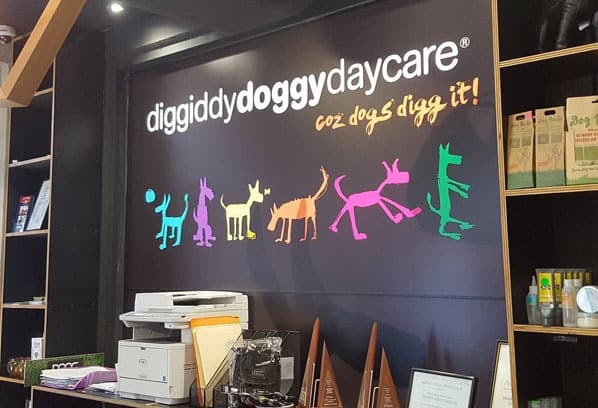
The South Melbourne front office. The trophies on the counter came before the sale did.
Lunch with the CEO
Here is the part most exit stories leave out: the sale itself was almost anticlimactic, because the preparation had been done years earlier.
Three years before the sale, Jeanette cleaned the accounts. Owner wages were adjusted to true market rates, personal expenses were stripped out, and the books were rebuilt to show exactly what the business would look like for whoever ran it next. The systemisation work meant the operating manual was already written. So when she decided she was ready, the process started with a phone call to PETstock’s CEO, a long-standing relationship, and a lunch where she said the words: I’m ready to get out.
Due diligence with a corporate buyer is brutal on an undocumented business. For DigDog it took about a year and a half from start to finish, and the documented systems carried an outsized share of the load.
After going through the systemHUB process, it meant that I had probably about seventy-five percent of the information ready to send off to their corporate business team.Jeanette Farren
What was the buyer actually paying for? Jeanette is precise about this, and she would know. She came from the finance side.
The first areas corporate buyers look at when valuing a business are its accounts and systems. The earlier people can educate themselves about systems, the better.Jeanette Farren
“I knew that we had done everything and more for the business to be a really good proposition for buyers, especially corporate buyers,” she says. “At the point of selling the business, we were running at full capacity, systems and processes were on-point, and financials were solid. This gave the buyers confidence that they could take this model and deploy it in other locations.” Which is exactly what PETstock has since done, opening Diggiddy Doggy Daycare locations in other states under their own banner.
Accounts cleaned
Market-rate wages set and personal expenses stripped, years before any buyer looked.
Due diligence
Three quarters of the corporate team’s information requests were already sitting in systemHUB.
Start to finish
From the lunch conversation to handing over the keys, with a smooth final handover.
Capacity at sale
The business sold while running full, profitable, and without Jeanette in the office.
Sell or don’t sell. The point is having the option
It would be easy to read this as a story about selling. It isn’t, quite. By the time the deal closed, Jeanette didn’t have to sell. The business ran without her: she had stopped going into the office completely. She could have held it under management, franchised it, or run it quietly for another decade. She chose the exit because after thirteen years she wanted to travel and, in her words, poke her head above the water a bit.
This is the part owners get backwards. Most start systemising when they have already decided to leave, which means they are building the asset at the exact moment they are most exhausted and least leveraged, and a buyer can smell it. The time to make a business sellable is while you still want to keep it. A business that needs you is not an asset. It is a job with a logo on the door.
Whether or not you sell is completely up to you, but at least you want to have the option, because you don’t know what’s going to get thrown at you.David Jenyns
The camper van epilogue
When we recorded the follow-up interview, Jeanette joined the call from her camper van. Two months after handing over the keys she had bought a caravan and set off around Australia, and by her own account couldn’t wipe the smile off her face. The trip produced its own insight, the kind you only get with distance: her next venture needed to be mobile, something that would never again keep her stuck in one building.

The next chapter has a name: Lighthouse for Business.
That insight became Lighthouse for Business, the advisory practice she runs today, where she helps other owners reset their strategy, rebuild their structure, and plan their own next move, exits included. As she told David, plenty of operators rinse and repeat the playbook, buying, systemising, and selling again, because once a business is simplified and documented, the model travels. She has taken a company from a train-ride idea all the way to a corporate acquisition, end to end. Few advisors can say that. In the SYSTEMology community, that record makes her royalty.
“Every single client would comment and come in and just say,
oh my god, this place is so calm.”
Jeanette Farren, Co-founder, DiggiddyDoggyDaycare

About DiggiddyDoggyDaycare
DiggiddyDoggyDaycare (DigDog) is a multi-award-winning dog daycare founded by sisters Jeanette and Nicole Farren in South Melbourne in July 2007. Offering daycare, grooming, training, a day spa, and dog taxi services, it grew to a full-capacity operation of 80 dogs a day before being acquired by PETstock in June 2019. The brand continues to operate under PETstock ownership, and Jeanette now advises other founders through Lighthouse for Business.
Visit digdog.com.au.

Ready to build a business a buyer would actually want?
Jeanette’s playbook was not complicated: document the Critical Client Flow, centralise every system, fix what the documentation exposes, and clean the books. Two years later the business sold at a high multiple. The Systems Champion Academy teaches the same methodology, step by step.